It is easy to see selfishness in others, but not so easy in ourselves. While we often have good intentions, our biases, blind spots, and mindless actions often cause us to behave at odds with our intentions.
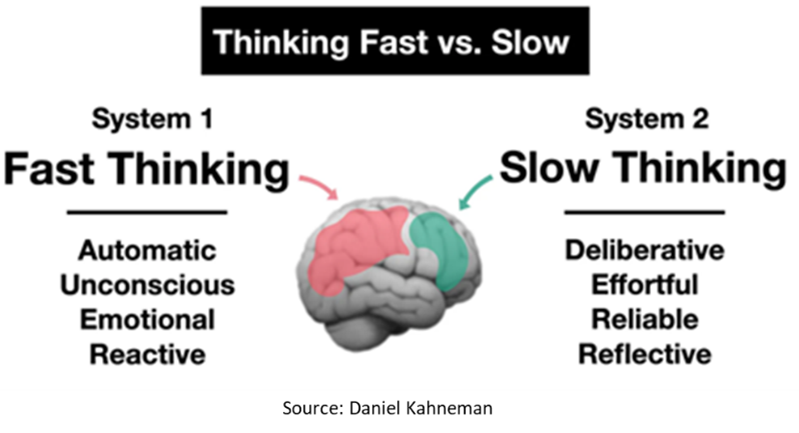
Another way to think about our brain’s two systems is that we have one we control and one we don’t. They are both part of us, but because the fast one happens automatically you might be tempted to think of it as not being you because you have little control of it. You may have said to yourself at some point, “where are these thoughts (or feelings) coming from?”
When people have been in a position of influence, especially for a long time, they can settle into a habit of giving the equivalent of monologs instead of having dialogs. They become accustom to people not giving feedback or sharing opposing opinions. This style of leadership seems effective because it is faster, but the downsides are significant
Many organizational leaders are operationally oriented. They were promoted from operational roles or still work in operational roles, so they are naturally operationally inclined. They primarily give their attention to an existing strategy rather than create a new one. They focus on doing more of, or doing better at, what they already do.