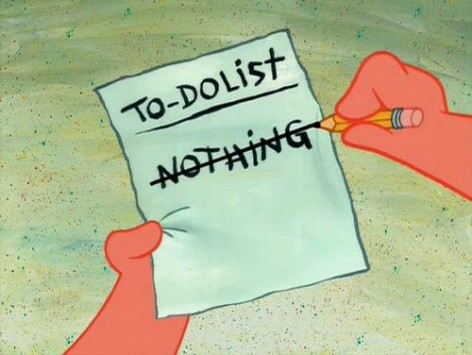
What would you do if your email in-box was empty, your voice mail was empty, you had no text messages, there was nothing scheduled on your calendar, there was nothing needing your attention on your desk, and no one asking for your help? What would you do? Given that most people have the opposite problem of juggling too many requests for their time, many people wouldn’t know what to do.
In our current society, with typically more to do than time to do it in, many people have settled into a routine of merely reacting to what comes at them. They have become mentally programmed to just respond to requests with little thought given to pursuing their own agendas. Whether at work or home, rather than be intentional about what they do, they essentially let their world dictate what to do.
Of course, there are exceptions. Some people find balance in being both proactive and reactive. Others do even better and generally decide for themselves what to do. They are intentional about what they give their time and energy. They conceive new initiatives rather than fulfill those of others. They embark on new projects that improve their work, surroundings, or themselves in some meaningful way. They lead change instead of being part of others’ change. They are curious and find opportunities to innovate.
Habits are great when you need to get things done, especially when doing repetitive work. Routines that take you in the direction you want to go are healthy. But when you live or work in a rut so deep that you can’t move in a different direction, the rut can be more harmful than helpful. When you essentially turn your brain off because you are so busy, you can lose sight of the bigger picture. You don’t see what might be more important to give your attention. For example, when you get so conditioned to dealing with problems, you might not think about how to prevent them from happening in the first place.
When you become mostly reactive, you can lose the ability to anticipate and think ahead. You get so focused on completing a task or addressing an immediate issue, you don’t think about what could be done next. You view success as checking boxes. This causes some people to wait to be told what to do or for the next issue to crop up before taking action. They don’t anticipate the next step, or the next, or the next.
Here are some examples of checking boxes that you might reflect on in considering how you do:
- When someone asks you for help, do you take time to understand the context of their request? Do you anticipate the next step? For example, if you receive a request for a report, do you take the time to understand the purpose of the report? Do you take time to interpret the report and anticipate the need for additional data?
- If you are invited to a meeting, do you understand the requestor’s true motive and need? Do you simply show up or do you work proactively to help accomplish the requestor’s objective?
- If you are in a position to receive a customer’s inquiry, do you simply answer their question, or do you probe, clarify, and understand the underlying need that produced the question?
- If you are creating something, like a new product or feature, do you go beyond understanding what you are developing? Do you know how your work interacts with the broader ecosystem in which it exists? How it might be enhanced to provide even more value?
These examples hopefully highlight that which might be more valuable than simply reacting out of habit.
For whatever role or responsibility you have, strive to find the appropriate balance of doing tactical work that achieves short-term needs with strategic work that takes longer but has a potentially bigger impact and adds more value. Avoid getting too comfortable or stuck on the treadmill of busyness as usual that views success as checking tactical boxes.
If you want to be more intentional and strategic, rather than simply reacting to what comes at you, apply the following principles:
- When asked for help, be very discerning about responding with “yes.” Rather than defaulting to “yes”, consider saying “no”, delegating to someone else, deferring to a later time, or putting conditions on your “yes”s when you already have your own work to do.
- Be careful about generally doing that which is fun, easy, convenient, or most urgent. Have the discipline that gives attention to that which is most important. If the most important is fun and easy, great, do it. But the most urgent is often not the most important.
- Pursue strategic goals rather than doing that which always has a near-term due date. Strategic goals often don’t have a due date making them easy to continually defer, but they can provide the more meaningful results than completing tasks do.
- Give significant attention and effort toward unique “project-type work” in contrast to recurring “sustaining work”. Strive to create as much or more than you maintain. Some amount of maintaining is always required, but it may do little to create new value.
- Deal with the root causes of problems rather than the byproducts of them which are usually mere symptoms. Uncover and address underlying needs or causes that create the problems so the undesirable consequences aren’t repeated.
- Consider the big picture in terms of how something impacts others or the future before doing it. Include in your scope of effort whatever is needed to ensure a positive long-term result for everyone being impacted as well as for other parts of the ecosystem in which your effort is applied?
- Understand the context of the requests made of you as opposed to assuming they are as straightforward as they may seem. Inquire about what will be done with the work you will do or to what end-result it is being applied before deciding what to do.
- Anticipate what comes next and next and next. When creating, maintaining, or doing any work, think beyond satisfying the immediate need. You may be in a position to most efficiently do a follow-on task, or several tasks, that can add a lot of value and save others a lot of time.
Apply these “working intentionally” principles to not only focus on what is most important, but to increase the positive impact you make on yourself and others, particularly over the longer term.
PDF version of this article: https://alpinelink.com/docs/How_to_Be_Intentional.pdf
