Have you ever forgotten an appointment? Or a task you agreed to do for someone? Of course. We all have, but maybe the better question is how often? Is forgetting something frequent, like weekly, or the exception, like annually?
Hopefully you rarely miss an appointment or forget to do something you agreed to do. If so, you probably rarely disappoint yourself or others. You are probably reliable and considered trustworthy. You are also probably organized.
In contrast, if you miss appointments or meetings from time to time, or often forget to do something, you probably are not very organized. Maybe you try to keep too much in your head. Or you write things down, but then forget to look at what you wrote down. Either way, you may be trying to remember too much.
The basic solution to not over relying on memory, being organized, getting things done, being productive, and being reliable is using systems. In the context of being organized, a system is a repeatable approach, usually facilitated with tools such as software, that provides structure to what is otherwise disordered or inconsistent. In the context of not forgetting, a system provides a consistent and reliable approach to recording information so it can be easily referenced and shared.
If you try to keep things in your head, or even on paper, you may do so because you don’t like systems. Otherwise, you would probably have one. If the benefits of having a system are not obvious, consider that systems:
- Make your life easier. You don’t have to remember as much. You don’t have to commit to memory where you need to be or when. You don’t have to keep in your mind what you need to do. You don’t have to try to recall what you forgot. You don’t have to constantly try to find or scan material previously recorded somewhere.
- Make you more productive. You can get more done because you aren’t doing things twice. You aren’t rescheduling or dealing with what you didn’t get done. You get things done on time and on the first attempt. Things don’t pile up and take up space—physically or mentally.
- Make you more competent and reliable. By using systems, you get more done and people notice. Your use of systems reassures people that you will get done what you say you will get done. People will see you as more capable and trustworthy.
Neuroscience finds that our brains have very limited short-term memory capabilities. For example, most people can’t recall more than 4-5 different numbers or words they just heard or read. We are much better at storing information long-term, but even our long-term memory is not as reliable as a computer’s data-storage drive. The reason is that we rebuild memories from multiple places in our brains based on the context of the need. Our memories are also updated as we learn and gain experience. They are also subject to our unconscious biases and the passage of time.
If you are willing to consider having a system, or to assessing your existing system, here are some ideas to consider.
The most fundamental system that enables people to be organized, especially for remembering things, involves capturing information. How do you capture information? Is it in a form that is easy to reference? Easy to share? Do you store it in a place that you can easily retrieve it from? Can you retrieve it from multiple places?
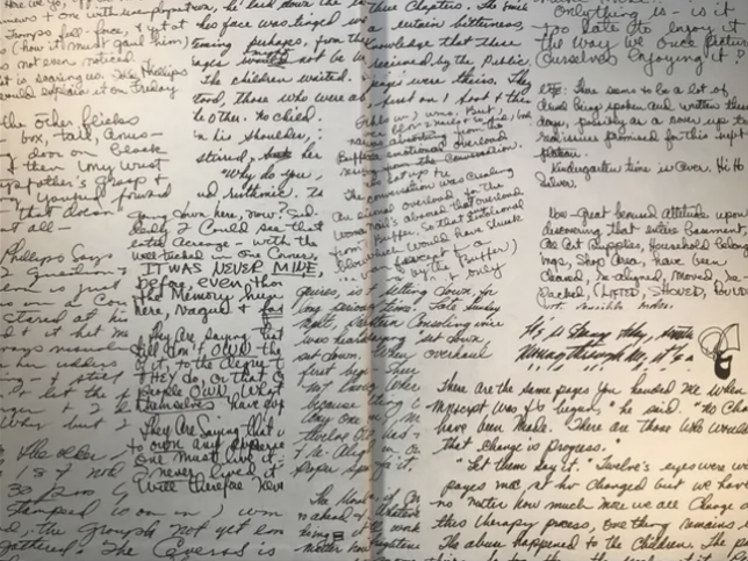
Some people still use paper to capture their information such as on paper calendars for events and note pads for notes and to-do lists. These are difficult to retrieve from different locations and lack the power of electronic search. They also often involve the duplicative effort of rewriting or translating. For some people, writing on paper includes writing in margins, squeezing too much information on one line, and attempting to connect thoughts with lines and arrows. This also makes later retrieval, understanding, and reference difficult.
Some people prefer taking notes on paper because they enjoy the sensory experience of using paper. Others find that the process of writing increases their memory retention. There are some who feel a sense of satisfaction in crossing tasks off their to-do list. Some simply prefer looking at information, including reading a book, on paper. These may be real preferences, at least until replaced with new preferences, but the limitations of memory still exist. So do the limitations of paper.
The other option for capturing, storing, and retrieving information is using an electronic device such as a computer, tablet, or phone. Making this approach even more powerful is the ability to store information in the Internet cloud which makes information available across multiple devices. You can capture your notes on your tablet, then retrieve them on your phone or computer. Same with your calendar, to-do list, favorite places you’ve visited, recipes, medication dosages, or whatever else you might want to reference or share.
I have been paperless for over twenty years. As with any change, it was uncomfortable at first, but within a few weeks my new system became my new normal. I type, speak, or record my meeting notes either into my online calendar entries or other documents. I put my to-dos on my online calendar. I put my appointments on my online calendar. I put other content such as notes from reading books, conversations, or my own thoughts in documents as well. All of this is synchronized across my devices using the cloud which enables me to access this information from any place on any device. The cloud also backs up my information so I can retrieve it should something happen to one of my devices.
Yet, the primary benefit of having information online goes beyond the ease and reliability of retrieval. It is the ability to search and share it.
In regard to searching, when your information is online, you can search it for keywords such as people’s names, places, or events. You can retrieve all your notes that you’ve captured for whatever topic you choose. You no longer have to remember what service technician you used for your home appliance repair years ago. You don’t have to remember when or where you participated in a past event. You don’t have to look for past recipes. You don’t have to remember anything you don’t want to commit to memory. Your devices and the cloud recall it for you.
In regard to sharing, you have the option and ability to easily share your electronic information with others. With the push of a button, you can collaborate with colleagues, friends, or family on the content you have captured. You can inform others about your plans and events. You can share your notes and ideas. You can ask for other’s input. You can jointly create and track plans, projects, events, trips, and whatever else on which you might want to collaborate.
Of course, this requires that you record your notes online. You will need to enter events into your electronic calendar. You will have to put your to-do list on your calendar or somewhere online. But once your information is online, you don’t have to reenter it. You don’t have to rewrite your do-to list. When you enter your information in digital form first, you don’t have to translate it into digital form later. You create it once.
When you have all your important information captured and stored electronically, you can use it in ways you might never have done before. You can easily prioritize your activities. You can defer them without forgetting them. With the touch of a button or voice command, you can revise, reschedule, share, or reference whatever you have captured. You can also automate it so you don’t have to do anything.
PDF version of this article: https://alpinelink.com/docs/The_Alternative_to_Remembering.pdf.
