With as much that is written, discussed, and spent on leadership development, you would think great leadership is the norm. That most everyone in positions of leadership would be considered great leaders with only a few exceptions.
Yet, many in positions of influence still don’t get it. They think leading is about commanding, controlling, and having authority. Not only bosses, but too many parents, spouses, and friends think that leading is telling. That if you want someone to do something, you tell them what to do.
The more effective approach to leading, than pushing people to do something, is pulling them toward a desirable future in which they believe and buy into. Effective leadership is having followers who follow by choice. Even more counterintuitively, leading is about pulling people forward by serving them. It is about helping others be successful as they pursue something meaningful. Great leaders help people achieve goals that make them successful as well as the overall organization in which they are a part.
Leading isn’t a title. Managing is the more often used title, but both are fundamentally about how a position of influence is used. Managing is about supervising, controlling, and ensuring compliance. Leading, in contrast, is about providing guidance, coaching, and helping people achieve something.
Because effective leadership is helping rather than forcing, it requires earning the right to lead. It depends on people wanting to be led and helped. This means that a leader has to be influential through trustworthiness, not through the power of authority.
Having a Manager, Director, VP, or C in your title generally comes with levels of authority and control, but merely relying on this power is the lazy way to lead. It is also the least effective. People don’t genuinely respect leaders unless they trust them. The most respected leaders possess a power that comes from earned attributes, not positional ones. They have the power of influence that comes from trust-building traits such as honorable character, loyalty, compassion, empathy, wisdom, and competence.
In people’s defense, leading by pulling, serving, and being trustworthy isn’t easy. It is easier to simply tell people what to do. However, here is why telling in most circumstances is much less effective. When people are told what to do, especially when done repeatedly, they learn to turn their brain off. They stop learning. They stop being proactive. They stop taking ownership. They stop feeling valued. They stop giving extra discretionary effort.
The challenge for many leaders is that leading through influence instead of authority requires having well-developed soft skills. Soft skills are not the competencies that many leaders learned in school or used to get their promotion into management. Soft skills are not technical or domain specific. They are more general, less tangible, and often more difficult to build. They include being an effective communicator, motivator, facilitator, change agent, strategic thinker, exhorter, and coach.
You can have power based on the authority you possess, the people you know, the resources you control, the knowledge you have, or simply by bullying, but the power that is most respected is your ability to bring out the best in people and help them achieve success.
If there is one overarching goal of great leaders it is this: to set their people up for success. Therefore, the number one trait of great leaders is the ability to help people be successful. Virtually all other qualities of great leaders contribute to this overarching trait. Of course, the definition of success needs to be properly defined and agreed upon. When done so, it leads to the success of the organization. So, when people achieve success, so does the organization, and by the way, so does the leader.
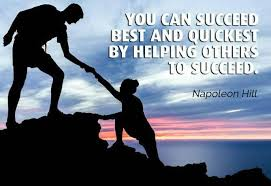
As the famous American self-help author of “Think and Grow Rich” and other timeless books, Napoleon Hill, said, “You can succeed best and quickest by helping others to succeed.”
To assess how well you help others be successful, consider these six questions:
- Do your goals emphasize how best to help those in your circle of influence? In other words, do the goals that you pursue focus you on helping others be successful?
- Do you help others craft clear goals that give equal focus to their success and the success of the larger group in which they are a part?
- Does your to-do list primarily reflect tasks related to helping others? Rather than having a list of tasks to do for yourself, does your list reflect the needs of others?
- Are you proactively looking for opportunities to help other people? Do you wait until asked for help, or do you look for “coachable moments” that you can leverage?
- Do you regularly ask people how you can help them achieve their goals? Do you ask people in your circle of influence, “what do you most need right now to achieve success?”
- Does most of your effort go toward helping others? In addition to having the best intentions, is most of your actual time spent coaching, guiding, exhorting, and holding others accountable?
PDF version of this article: https://alpinelink.com/docs/The_Number_One_Trait_of_Great_Leaders.pdf
